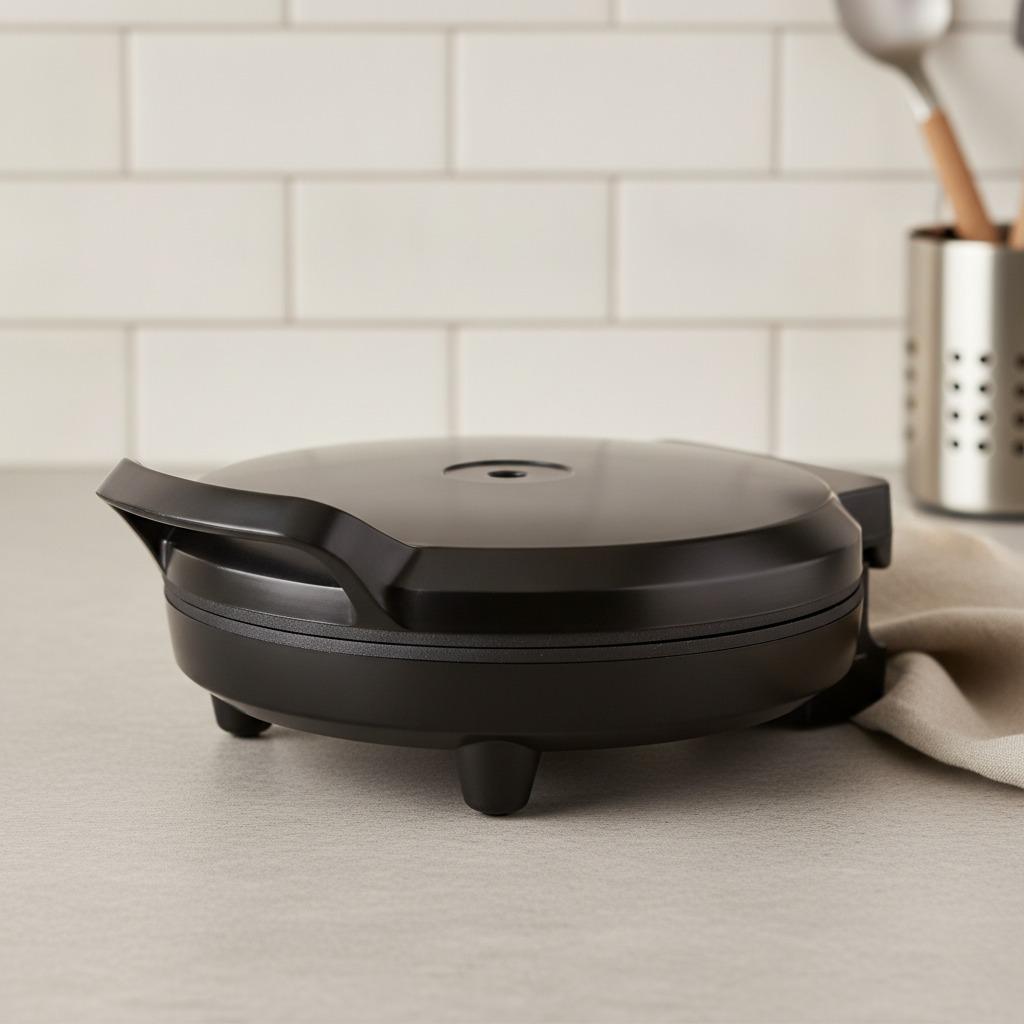
BP-PA02: what this low-profile plastic container suggests to a buyer
When sourcing a round lidded container like BP-PA02, the first question is usually not about aesthetics. It is about function: will the shape, lid style, and handling features actually fit the way the container will be used on the floor, on a shelf, or at a workstation? From the available product data, BP-PA02 appears to be a compact molded plastic vessel with a circular footprint, enclosed lid, side grip, and a small protruding feature that could serve as a latch, pour point, or attachment detail. That combination points to a practical, utility-focused part rather than a decorative one.
That matters because buyers often narrow their options too quickly around capacity or color and miss the real risk: a container can look simple but still fail in handling, sealing, stacking, or dispensing. A round body with a low profile usually makes sense where stability and access matter more than height. The question is not whether it is “just a container.” The question is whether its geometry supports the process it will live in.
What the visible design tells you
Based on the image description, BP-PA02 seems to be injection-molded plastic with a matte-to-semi-gloss black finish. The part is enclosed, with a flat lid and a central lid feature that could be a fastener or opening point. One side includes an integrated handle or ear-like grip, while the opposite side shows a rectangular protrusion. Those details are worth noticing because they often reveal how the part is expected to be used.
A side handle suggests manual carrying or repositioning. A protruding section may indicate a latch interface or a controlled pour feature, though that cannot be confirmed from the image alone. The short foot or support underneath is also useful to note. It may improve stance on a bench or reduce direct contact with the surface. Small details like that can be the difference between a tidy in-process container and one that is annoying to move or clean.
Where this type of container usually fits
A round lidded plastic container with a compact profile can work in several settings: dry ingredient handling, small-parts storage, dispensing stations, lab benches, back-of-house food service, or general industrial organization. The exact application for BP-PA02 is not identified, so it should not be treated as a confirmed food-grade or laboratory-approved item without verification.
For sourcing teams, that uncertainty is not a weakness in the product description; it is a reminder to define use conditions before asking for a quote. If the container is meant for dry goods, the buyer may prioritize cleanability and lid retention. If it is for small components, the focus shifts to access speed, chip resistance, and whether the shape nests or stacks efficiently. If it is for transport, grip and closure behavior matter more than appearance.
Key buying criteria for BP-PA02-style containers
1. Closure behavior
Do not assume that an enclosed lid means a secure seal. Ask how the lid is retained, how often it can be opened, and whether the latch or central feature is cosmetic or functional. In low-profile containers, lid integrity is often the first point of failure.
2. Handling and ergonomics
The integrated side grip is a practical detail, especially if the container is moved frequently. Check whether the grip is comfortable with gloves, whether it catches on adjacent parts, and whether the weight distribution feels balanced when full.
3. Material fit for purpose
The product appears to be molded plastic, but the exact material grade is unknown. That means buyers should confirm chemical exposure, temperature range, impact needs, and any cleaning requirements before committing. A black finish can be practical for concealment and wear, but it does not tell you much about performance.
4. Access and dispensing
If the rectangular protrusion is a pour or dispense feature, the flow path should be checked carefully. Dispensing parts are often where an otherwise ordinary container becomes inconvenient. A clean opening is not the same as a controlled one.
Common mistakes when evaluating a part like this
The most common mistake is buying by silhouette. A round black canister looks simple, but the use case can be very specific. Another mistake is assuming that a snap-fit or latch-style assembly will behave the same across materials and wall thicknesses. Small changes in molding can affect stiffness, fit, and long-term durability.
Buyers also sometimes skip the basic operational questions: Is it meant to be carried one-handed? Does it need to sit flush on a cart? Must the lid open repeatedly during a shift? If those details are not captured early, the procurement team can end up with a part that technically matches the drawing but is awkward in service.
Practical next step for sourcing teams
If BP-PA02 is under consideration for a program, the next step should be to confirm the exact use environment and request the missing technical data before approval: dimensions, capacity, material grade, closure type, and any relevant compliance information for the intended application. Without those basics, even a well-made molded container is still only a general-purpose option.
For teams comparing similar plastic containers, the real decision is less about shape and more about workflow. A part like BP-PA02 should earn its place by making handling easier, not by looking tidy in a catalog photo. If you are evaluating a custom or standard molded container for storage, dispensing, or transport, start with the use case, then check the geometry, and only then worry about the color finish.