What an espresso coffee machine supplier should help you solve
If you are evaluating an espresso coffee machine supplier, you are usually not just buying a countertop appliance. You are trying to reduce breakage, simplify beverage service, and get a machine that fits the way people actually work on the floor, behind the counter, or in a shared office pantry. That matters because a machine that looks good in a brochure can still become a maintenance headache once it is asked to grind beans, heat water, froth milk, and repeat the cycle all day.
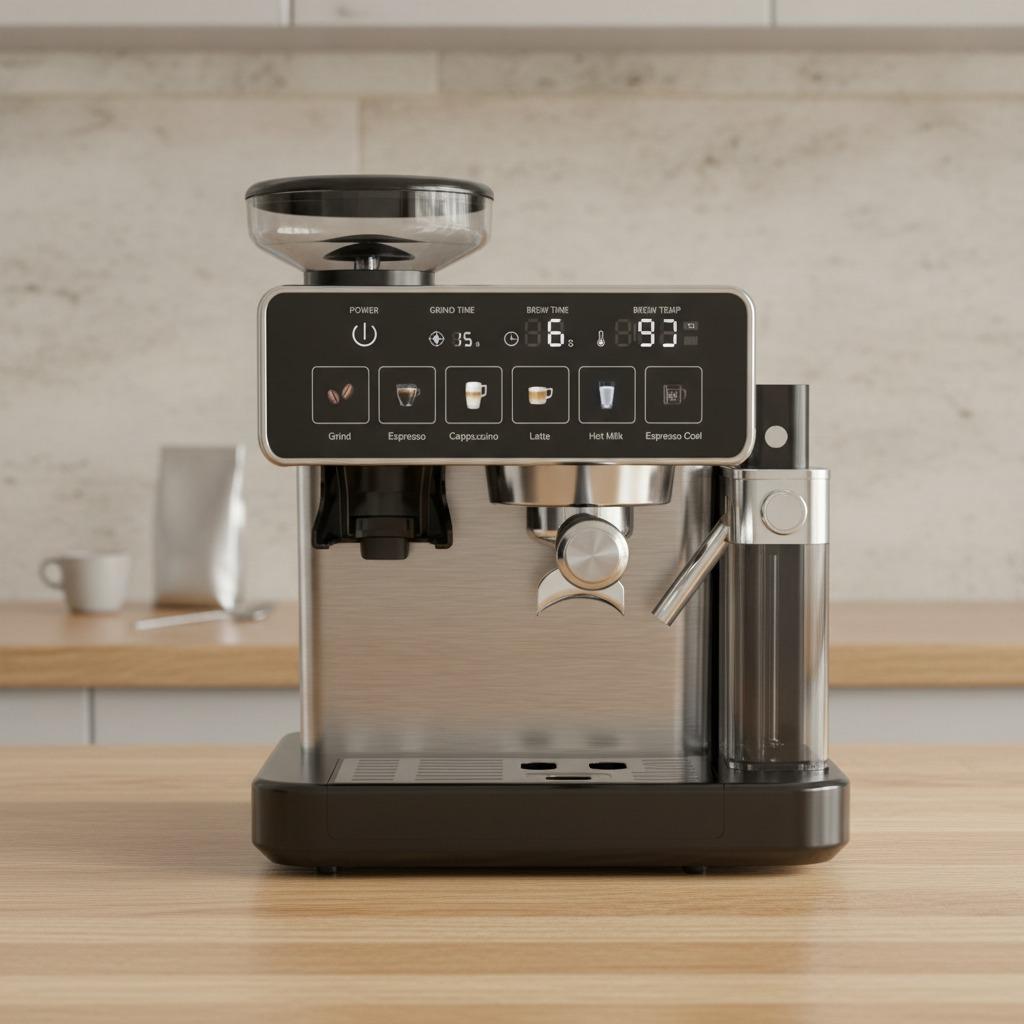
The machine described here is a compact bean-to-cup unit with a built-in grinder and milk frothing or dispensing functions. It shows a front panel with Grind, Espresso, Cappuccino, Latte, Hot Milk, and Espresso Cool modes, plus digital readouts for grind time, brew time, and brew temperature. Those are not decorative features. They point to a machine meant for repeatable drink preparation, with enough programming to keep output more consistent than a basic manual setup.
Why this machine format is attractive to buyers
For many buyers, the appeal is straightforward: one countertop footprint, several drink options, and fewer separate devices to coordinate. A bean-to-cup espresso machine can reduce the need for a separate grinder, a standalone milk device, and multiple operator steps. That can be useful in offices, self-service beverage areas, hospitality counters, and smaller foodservice environments where labor is tight and training time is limited.
The brushed stainless-steel front gives the machine a more durable, commercial look, while the black plastic top, base, and control housing suggest a practical small-appliance build. The visible transparent hopper and side water tank also make day-to-day checks easier. Staff can see bean level and water level at a glance, which sounds minor until a rush hits and someone has to figure out why the machine stopped mid-service.
Key features buyers should actually compare
Drink menu and control logic
Front-panel selections matter because they affect how many steps the operator must take. A machine with dedicated modes for espresso, cappuccino, latte, and hot milk is more convenient than a unit that leaves every adjustment to the user. The visible grind time, brew time, and temperature display also suggest programmable control, which can help teams standardize drinks across shifts.
Milk handling
Milk frothing is often where compact beverage machines become either very useful or very annoying. If the machine uses a frothing wand or milk line assembly, check how easy it is to clean and whether the parts are exposed enough for routine sanitation. In mixed-use settings, milk residue is one of the fastest ways to create flavor issues and service complaints.
Water and bean access
A side-mounted removable water tank is practical for placement against a wall or on a crowded counter. The top bean hopper keeps the footprint compact. Still, buyers should think beyond the first setup photo. If the machine will be filled by non-technical staff, simple access can save time and reduce spills.
What the construction suggests about manufacturing needs
This type of espresso coffee machine supplier product usually sits at the intersection of molded plastics, stainless-steel panels, transparent reservoir parts, and embedded electronics. That means quality control is not just about the coffee result. It also depends on assembly fit, sealing, wiring, control-panel reliability, and the durability of moving or removable components.
A practical buyer should ask how the supplier handles repeat assembly consistency, water-contact component integrity, and service access. The internal mechanism is not visible here, so it would be unwise to assume anything about pump pressure, boiler design, or grinder type. Those details should be confirmed in the technical file, not inferred from a product photo.
Common mistakes when sourcing this kind of machine
One common mistake is buying on feature count alone. A panel packed with drink buttons does not guarantee easy upkeep or stable performance. Another is ignoring cleaning workflow. If a machine will be used by office staff or casual users, the cleaning steps need to be obvious and quick. Otherwise, flavor consistency drops and service calls rise.
Buyers also sometimes forget to match the machine to expected volume. A compact countertop unit may be ideal for light to moderate use, but it should be evaluated carefully before being placed into a setting that behaves like a café line all morning. That is where wear, heat management, and access to consumables start to matter.
Questions to put to an espresso coffee machine supplier
Ask whether the machine is intended for home, office, café, or self-service use, and what that means in practical duty-cycle terms. Confirm the cleaning routine, removable part list, and serviceability of the water tank, hopper, and milk system. Request documentation for the programmable settings and the operating sequence for each drink mode. If a supplier cannot explain those points clearly, that is usually a warning sign.
Buyer takeaway
The best espresso coffee machine supplier is not the one with the flashiest specification sheet. It is the one that can supply a compact bean-to-cup machine that is easy to operate, sensible to maintain, and suitable for the actual beverage volume you expect. For this product type, the decision usually comes down to workflow, cleaning effort, and control consistency more than appearance alone.
If you are comparing suppliers, start with the drink modes, the accessibility of the hopper and water tank, and the clarity of the brewing controls. Those details will tell you more about day-to-day performance than polished sales language ever will.